
(How the operated tissues are removed ?)
MORCELLATION is a surgical technique used to break up large pieces of tissue into smaller fragments so they can be removed through tiny incisions. It is most commonly used in gynaecology for procedures like removing the uterus (hysterectomy) or fibroids (myomectomy).
When a surgeon performs "keyhole" (laparoscopic) surgery, they work through very small cuts, often only about 1 centimetre wide. If the organ or fibroid being removed is larger than that, it won’t fit through the small opening. To solve this, surgeons use a tool called a morcellator—which works somewhat like a high-speed blender or an apple corer—to cut the tissue into small strips or pieces that can be pulled out through the thin surgical tubes.
The primary benefit of morcellation is that it allows for minimally invasive surgery. Without it, a patient with a large uterus or fibroid would need a much larger "open" incision (laparotomy). Benefits of the smaller cuts include:
While helpful, morcellation has faced significant controversy due to two main risks:
Because of these risks, the U.S. FDA has issued strict warnings and restricted the use of "power" (motorized) morcellators in many women, particularly those who are post-menopausal or at higher risk for cancer.
To make the procedure safer, many surgeons now use "in-bag" morcellation. The tissue is placed inside a durable surgical bag before it is cut up, which acts as a container to catch any stray cells or fragments and prevent them from leaking into the body.
In-bag morcellation is a gynecological surgical technique that uses a containment bag to isolate uterine tissue during laparoscopic removal, preventing the spread of potentially cancerous cells. The procedure involves inserting the tissue into a bag, creating a contained workspace with CO2, and using a morcellator to cut tissue safely. The FDA recommends this contained approach, particularly for patients with a lower risk of uterine sarcoma, to improve safety over traditional, open morcellation.
Laparoscopy involves performing surgeries through tiny 3 mm-15 mm incisions or cuts in the tummy. These tiny incisions heal faster, have a quicker recovery time, are cosmetically better and are associated with better patient satisfaction.
However, tissue retrieval is an art in these surgeries. The idea is to cut the tissues (e.g fibroid in a myomectomy, cysts in a cystectomy etc.) into smaller pieces so that they can be taken out through these small incisions. This process is known as morcellation.
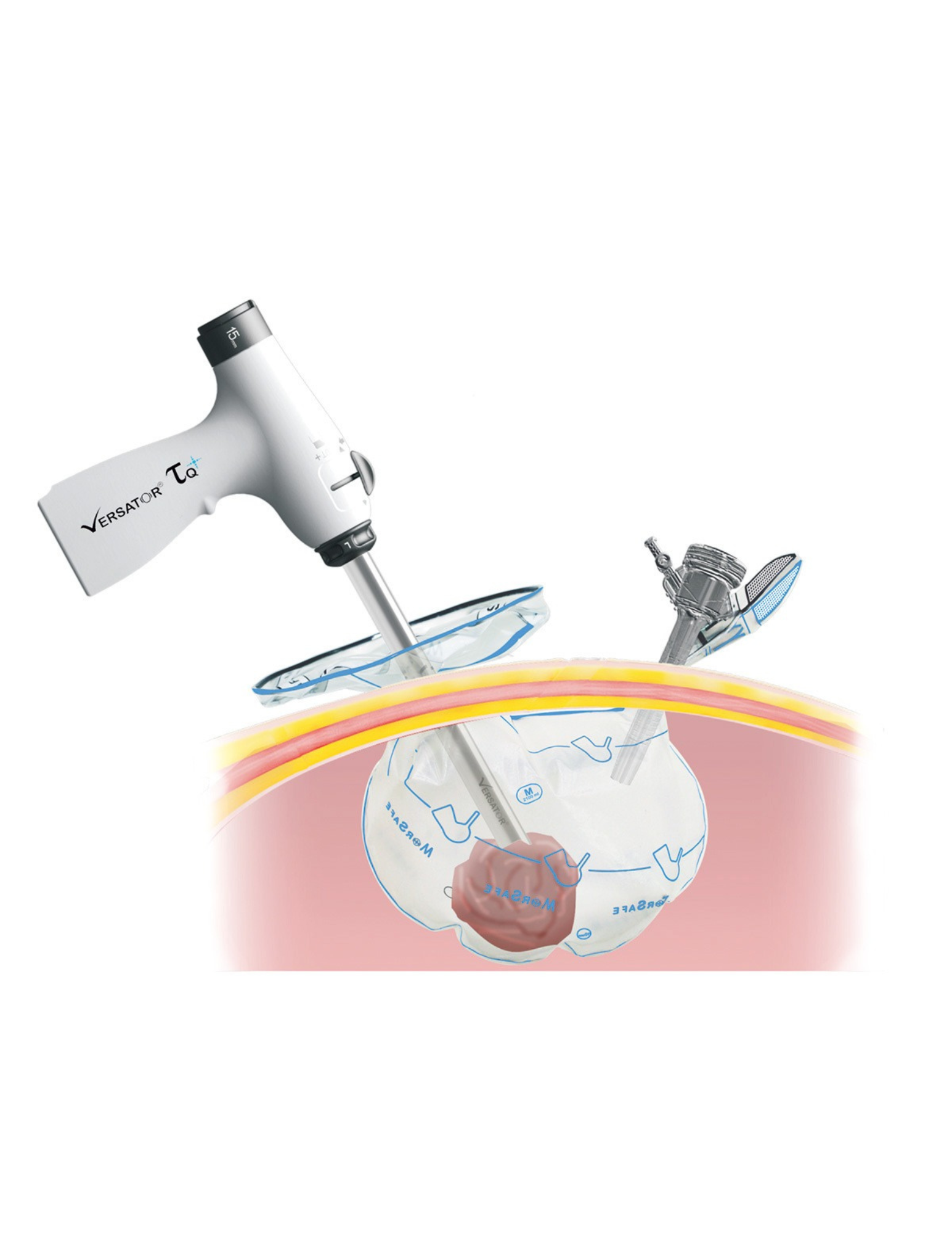
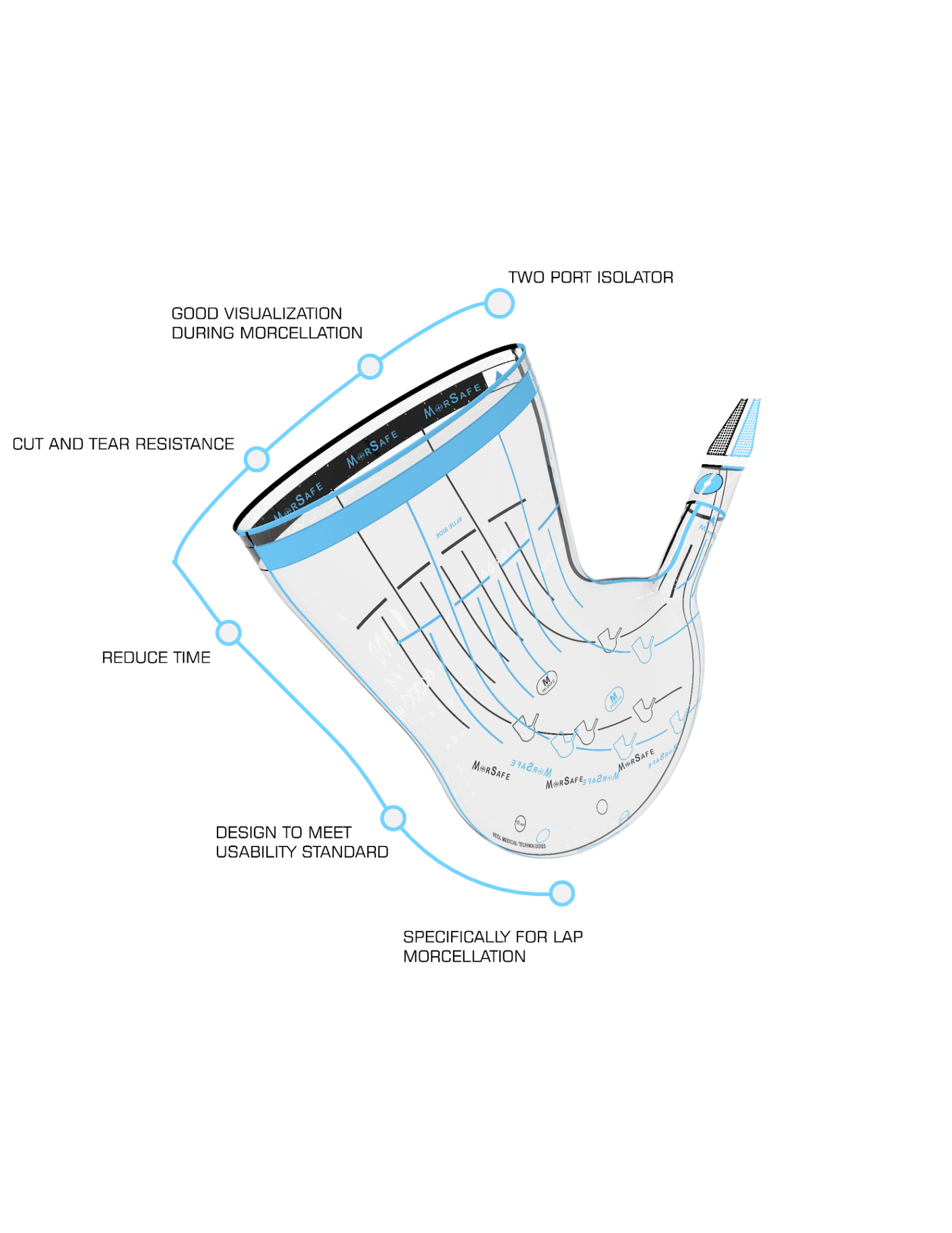
Uterine fibroids represent one of the most prevalent gynecological pathologies affecting women of reproductive age, with reported incidence ranging from 20% to 80% globally. Since 1993, method of choice for tissue morcellation has been power morcellation, which came under scrutiny after strong and repeated warnings by the FDA in 2014, indicating the risk for spreading malignant cells during the procedure originating from unsuspected sarcoma mistaken for benign fibroids. The incidence of such an event is around 0.02–0.25% referring to unsuspected leiomyosarcoma and 0.13–0.47% to uterine malignancies overall. International gynecological societies strongly recommend thorough patient information on the potential risks and consent before considering morcellation. Although proponents argue for the potential reduction in morcellation-related complications with containment bags, skeptics highlight concerns regarding increased operative time, cost, and device-related complications.
Benefits of laparoscopy with tissue retrieval through morcellation
The concern for occult cancer risk and parasitic myomata may compromise the benefits of minimal-access surgery for uterine leiomyoma. However, the standard use of containment systems, as advised by the FDA in 2020, could help to reduce the risk of dissemination by electromechanical morcellation.
Many studies show that contained morcellation is a feasible and safe method to retrieve large benign surgical specimens and for suspected cases of cancer.
Learn more about us by visiting this About page.
You can contact us by clicking this link.