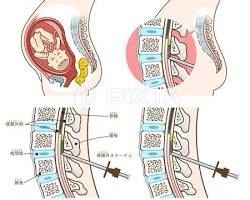
*Painless delivery* (also called painless normal delivery or epidural delivery) is a way of having a *normal vaginal birth* (baby comes out naturally through the birth canal) but with *much less pain* during labour.
## Common Myths vs. Reality
Myth: "Epidurals cause permanent back pain."
Reality: While you might have soreness at the injection site for a few days, studies show no direct link between epidurals and chronic long-term back pain.
Myth: "It will stop my labor entirely."
Reality: It may slow labor down slightly for some, but for others, the relaxation actually helps the cervix dilate faster.
Myth: "I can't move my legs at all."
Reality: Modern "walking epidurals" use lower concentrations of medication, often allowing for some leg movement and position changes.
In simple words:
- Giving birth normally is usually very painful because of strong contractions and the baby moving through the birth canal.
- In painless delivery, doctors give a special medicine through *epidural* (or epidural anaesthesia).
-The doctor puts a thin tube in your lower back (near the spine).
-Through this tube, medicine is given that *numbs the pain* in the lower part of your body.
-You stay *fully awake* and alert — you can still feel pressure (to know when to push), but the sharp pain of contractions almost disappears.
-You can see and hold your baby right after birth, just like in normal delivery.
-It's not 100% zero pain for everyone, but it makes labour *way more comfortable* for most women.
It's very popular now because it helps the mother stay calm, relaxed, and less tired during the long hours of labour.
It's safe for both mother and baby when done by experienced doctors (anaesthesiologist + gynecologist). Many hospitals in India offer this option.
If you're thinking about it, talk to your doctor early in pregnancy to understand if it's suitable for you!
Here are the *main pros and cons* of epidurals for labor and delivery (painless normal delivery), explained in simple words.
Pros (Benefits) of Epidural
-*Best pain relief* — It removes or greatly reduces the sharp pain of contractions and delivery. Most women feel only pressure (to know when to push), not intense pain. It's the most effective option compared to other methods like opioids or gas.
-*You stay awake and alert* — You're fully conscious, can see your baby being born, and feel mentally present (unlike general anesthesia or heavy drugs that make you drowsy).
-*Helps you rest and relax* — Long labors can be exhausting. Pain relief lets you save energy, reduce stress/anxiety, and sometimes even rest or nap between contractions.
-*Adjustable and flexible* — Doctors can increase or decrease the medicine as needed. Some "walking epidurals" or low-dose versions let you move around a bit.
-*Ready for emergency C-section* — If a sudden C-section is needed, the area is already numb and some more top up is given, so no extra delay for anesthesia.
-*May lower serious complications* — Recent studies suggest epidurals can reduce the risk of severe maternal problems like heavy bleeding by about 35% in some cases, especially for higher-risk women.
-*Minimal effect on baby* — The medicine reaches the baby in very small amounts. No clear evidence of harm to the baby's heart rate, breathing, or long-term development in most cases.
Cons (Drawbacks / Risks) of Epidural
-*May make labor longer* — It can slow the pushing stage (second stage) because you feel less urge to push strongly, as it relaxes pelvic muscles. Some studies show a modest increase in time (e.g., 30–60 minutes extra in first-time moms).
-*Higher chance of assisted delivery* — Slightly more likely to need forceps or vacuum (assisted vaginal birth) because pushing is harder. (Note: Modern low-dose epidurals have reduced this difference compared to older ones.)
-*No increase in C-section rate* — Most recent evidence shows epidurals do *not* raise the chance of cesarean section.
-*Not always 100% effective* — In a small number of cases, it doesn't fully work or wears off unevenly.
-*Limits mobility* — You usually stay in bed (though "mobile epidurals" help some women walk a little). Can't use in home births or some birth centers.
*Common side effects*
Low blood pressure (treated with fluids/medicine; can briefly affect baby's heart rate).
Itchy skin, nausea, or fever.
Need for a urinary catheter (because you may not feel when to pee).
One-sided numbness (if the medicine spreads unevenly).
*Rare but possible complications*
Severe headache (from accidental spinal tap).
Temporary back soreness (not long-term back pain — studies show no link).
Very rare serious issues like infection, nerve damage, or breathing problems.
Overall, epidurals are considered *very safe* when given by trained anesthesiologists in a hospital. Millions of women use them every year with great results. The biggest benefit is pain control, and most risks are manageable or rare.
Talk to your gynecologist or anesthesiologist during pregnancy — they can explain based on your health, hospital setup, and preferences. Every birth is different!