
Vaginal Delivery vs C-Section
(Compare vaginal delivery vs. C-section. Understand the pros, cons, recovery timelines, and medical reasons for both to make an informed birth plan.)
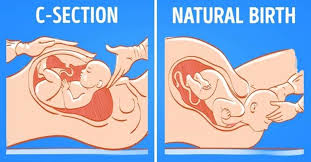
Choosing between a vaginal delivery and a Cesarean section (C-section) involves weighing different recovery timelines, surgical risks, and physiological processes. While many births are planned as one or the other, medical circumstances during labor can sometimes necessitate a shift in the plan.
Here is a breakdown of the primary differences:
Comparison at a Glance
| Feature | Vaginal Delivery (Normal) | C-Section (Surgical) |
|---|---|---|
| Procedure | Natural process through the birth canal. | Major abdominal surgery to remove the baby. |
| Hospital Stay | Typically 1–2 days. | Typically 3–4 days. |
| Recovery | Faster initial recovery; soreness for days/weeks. | Longer recovery; 6+ weeks for full tissue healing. |
| Pain Location | Perineum and pelvic region. | Abdominal incision site. |
| Future Births | Generally allows for easier future deliveries. | May require repeat C-sections (VBAC is possible but carries risks). |
Vaginal Delivery
The Benefits:
- Faster Recovery: Most people are up and walking within hours.
- Microbiome Exposure: As the baby passes through the birth canal, they are exposed to beneficial bacteria that help prime their immune system.
- Lung Clearing: The physical pressure of the birth canal helps squeeze fluid out of the baby's lungs.
- Immediate Contact: It is often easier to initiate skin-to-skin contact and breastfeeding immediately.
The Risks:
- Tearing: Risk of vaginal or perineal tearing, which may require stitches.
- Pelvic Floor Issues: Potential for temporary or long-term urinary incontinence or pelvic organ prolapse.
C-Section Delivery
The Benefits:
- Predictability: Can be scheduled in advance if there are known complications (like placenta previa or breech positioning).
- Reduced Pelvic Trauma: Lower risk of vaginal tearing or immediate pelvic floor damage compared to a difficult vaginal birth.
- Life-Saving: Essential when the baby is in distress or if labor fails to progress.
The Risks:
- Surgical Risks: Higher risk of blood loss, infection, and blood clots compared to vaginal delivery.
- Longer Healing: Lifting heavy objects or driving is usually restricted for several weeks.
- Respiratory Issues: Infants born via C-section are slightly more likely to have transient tachypnea (temporary fast breathing) because fluid wasn't squeezed from the lungs.
- Future Complications: Scar tissue (adhesions) can make future abdominal surgeries more complex.
When is a C-Section Necessary?
Sometimes, a C-section isn't a choice but a medical requirement. Doctors typically recommend it if:
- Labor Stalls: The cervix stops opening or the baby stops moving down.
- Fetal Distress: The baby’s heart rate indicates they aren't tolerating labor well.
- Abnormal Position: The baby is breech (feet/bottom first) or transverse (sideways).
- Placental Issues: The placenta is covering the cervix.
- Multiples: If you are carrying twins or triplets.
Note: Every pregnancy is unique. The "best" method is the one that ensures the safety of both the parent and the baby based on the specific medical context of the delivery.
Add Comment
You can contact us by clicking this link.
Radhika Raj
August 21, 2026, 11:48 amI would like to book an appointment with Santosh Ma’am for tomorrow. Could you please let me know if an appointment is available?
Dr. Gurpreet raina
August 19, 2026, 3:49 pmPlease let know the fellowship programes with fee structures . Thanks
Muhammad Umair
August 1, 2026, 9:26 pmMam me aapki peshent hu purani aapse milna he pleez mam